Wednesday, September 24, 2014

Sobering Words of Advice for Transitioning Military Veterans As You Enter The Job Market - Sultan Camp's Article


In a recent edition of Business Insider, recruiter Sultan Camp offers a very provocative article entitled: "Thank You for Your Military Service - Here Are 9 Reasons Why I Won't Hire You."  Written from his perspective as a headhunter who places military veterans in a variety of roles, he offers nine warnings that should serve as a cautionary tale to each veteran who is preparing to enter the job market in what is still a challenging economic climate.

I will share the 9 Topics, and trust you to click on the following link to dig deeper and read the full article.


  1. You Can’t (or Won’t) Accept That You’re Starting Over
  2. You Believe You’re Unique (Just Like Every Other Transitioning Person That Day)
  3. Your Resume Is Longer Than the CEO of Our Company’s (or Shorter Than a Recent College Graduate’s)
  4. You Didn’t Proofread Your Resume
  5. You Don’t Have a LinkedIn Profile (Or, Even Worse, It’s Not Complete
  6. You Think Social Media Is For Kids or Sharing War Stories
  7. You Didn’t Prepare For The Interview
  8. You Wrote a Thank You Note (But Only to Say Thank You)
  9. You Don’t Know What You Want to Do

    Full Business Insider Article Link
Let me add my own observation to Mr. Camp's excellent advice.  I would add Points #10 and #11:

#10. You did not utilize your network of contacts assertively enough or strategically enough to open doors for you.

#11  \Prepare to tell your "story" in short narrative vignettes, telling what you have done to solve a problem or seize an opportunity and telling how you have utilized your hard skills and soft skills to accomplish something meaningful.  Weave these stories into the interview.

Among the 9 Points that this article makes, I would highlight #3, #4, #5 #7 as particularly crucial.

#3 For most military veterans, a two page resume is appropriate, using the Harvard Business School format.  It should be results oriented with data to back up claims of productivity rather than just a list of activities you have performed.  You should be telling a story of what you accomplished, not just what you did with your time.

#4 Ask at least one other trusted person to join you in reading and re-reading and proofreading your resume to weed out errors and fine-tuning sections that are not clear and concise.

#5 LinkedIn - a full Profile with recommendations and endorsements is an absolute necessity in this job market.  If you need help, I refer you to a fine book written by my friend, Dave Gowel, "The Power In A Link"


#7 Prepare for the interview by learning all you can about the company, the job, the culture, the background of the people with whom you will be interviewing.  Use your network connections and their connections to learn all that you can so that you can make the case for yourself as someone who can solve the problem that needs to be solved by filling this open position.

Think of all of these steps of preparation as battlefield assessment, coming up with a battle plan and executing that plan.  If a job offer does not result, then do an "After Action Review" to see what lessons you can learn so that you are better at interviewing the second, third and tenth time around.

This is a battle you can win, but it takes preparation, courage, resilience and team work.

Best of luck in finding the next meaningful place of service  and employment.

Al


achase47@gmail.com

The Directors Company Presents the World Premiere of "Almost Home" by Walter Anderson


Thursday evening marked the World Premiere of Walter Anderson's play, "Almost Home," presented by The Directors Company and Directed by Michael Parva at the Acorn Theatre on Theatre Row on 42nd Street.  This new play is a crisply told story about a wounded Vietnam vet - a Marine sergeant returning home to the Bronx and to some undeclared wars on the home front.

"Almost Home" is the first drama written by Playwright Walter Anderson, former Chairman and CEO of Parade Magazine.  Anderson draws from his own experience as a Marine sergeant in Vietnam and his roots growing up near White Plains Road to tell a very gritty and authentic Bronx tale.  He knows full well that the men returning from 'Nam did not return to ticker tape parades, but to parades of nightmarish images and sounds beating an incessant tattoo of accusation and self-doubt inside their heads.  One of the fellow veterans of Vietnam who collaborated with Mr. Anderson in fine-tuning this play was former U.S. Senator Jim Webb, who was in attendance at last night's opening performance.

The play is carefully and beautifully written, speeding along at a sparse eighty minutes.  Within those precious minutes, Mr. Anderson weaves a complex tale of the homecoming of Johnny Barnett, who has been granted a 72-hour leave before having to report to Camp Pendleton, California.  Mr. Anderson uses an economy of words and of action that propels the play at a brisk pace.  The only exceptions are a handful of scenes between Harry Barnett, Johnny's father, and NYPD Captain Pappas that could be tightened up a bit.

Even before the actors take the stage, the audience has been successfully transported to the 1960s. Harry Feiner's splendidly gritty set reminded me of the flat occupied by Ralph and Alice Kramden in "The Honeymooners." From the enameled stove to the besmudged Frigidaire, we have a sense of time and place and even an approximation of which rung on the Bronx socio-economic ladder that the family occupies. The framed photo of JFK peering out at us from over the refrigerator reminds us that even though Kennedy is dead and gone, his legacy lives on in many ways, including the war that LBJ inherited when he took the oath of office aboard Air Force One in Dallas.  Quentin Chiappeta's Sound Design kicks in and we are treated to a couple of period songs that reinforce the fact that we are back in the days when Camelot was being replaced by The Great Society.  The costumes of Michael McDonald and the Lighting of Graham Kindred complete the picture.

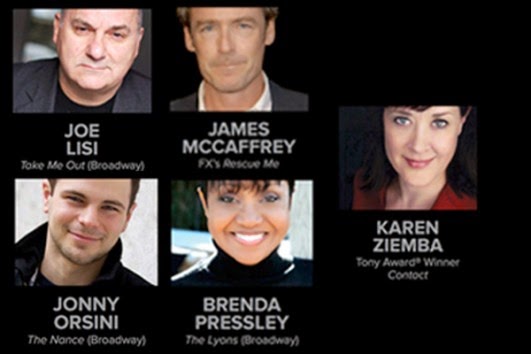
In a prologue, the scene is set for tensions that will rise between Harry Barnett and his family and Captain Pappas.  Harry, played with perfection by Joe Lisi, has been arrested for DUI.  Mr. Lisi is himself a former Marine and former NYPD cop, so there is a deep and palpable genuineness  to his portrayal of the WWII vet who struggles to hide his inner battles with alcohol and compulsive gambling.  James McCaffrey sounds all the right notes as the smarmy and belligerent corrupt NYPD Captain who rules as 47th Precinct as if is were his personal fiefdom.  Like a Mafia don, he values unquestioning loyalty and he expects it from Harry and Johnny, both of whom are in his debt.

Johnny returns from Vietnam, beginning to heal from wounds both physical and psychic.  Jonny Orsini portrays the Marine sergeant in a bravura performance that is magnificent.  He returns to the Bronx apartment in which he grew up to find his parents still squabbling as they have always done.  He harbors secrets that he is reluctant to reveal, so he skims along the surface - distributing gifts to his parents and to his former teacher and muse, Miss Jones. He shares with them his tentative plans. The Marines have offered him a chance to become a Drill Instructor at Camp Pendleton or Camp LeJeune should he choose to re-enlist.  But he has decided to attend junior college in Fullerton, California. His mother, the long suffering Grace Barnett, is played by Karen Ziemba.  Ms. Ziemba has us believing that this traditional stay-at-home submissive housewife and protective mother is able to summon the strength to confront her husband and force him to unburden himself of secrets he has carried with him since returning from the Battle of the Bulge and a scarring POW experience.  Grace wants Johnny to go to college, but not in California.  Harry wants his son to stay in the Marines and make something of himself as a DI.  Miss Jones wants Johnny to dream of limitless possibilities, as he had begun to do when he read the books she introduced to him when they were teacher and pupil.

The wild card in this equation is Captain Pappas, who shows up to make Johnny an offer he can't refuse. In exchange for forgiving debts owed to him by Harry and Johnny, the Captain has arranged for Johnny to attend the NYPD Police Academy and to join the elite Internal Affairs Department.  He has ulterior motives, as always,  With the immanent swearing in of reformist Mayor John V. Lindsey, there will be investigations of the goings on at Precinct 47 and elsewhere in the vast landscape of the NYPD.  Captain Pappas wants Johnny to be his man inside the IAD to warn him of impending investigations.  In a climactic scene that takes place on Captain Pappas' turf at the 47th Precinct House, Miss Jones confronts Pappas.  Broadway veteran Brenda Pressley summons up several layers of attitude befitting a lioness protecting her cub from a predator when she lets loose with a tirade aimed at Pappas that draws from colorful vernacular from the mean streets.  It is a memorable moment in the play.


Beginning with Mr. Anderson's inspired writing and Mr. Parva's clear direction, the quintet of actors tell the story of Johnny's homecoming in a compelling and moving way.  It is clear that we are being told a complex tale of wars being fought in many theaters and at many levels.  There are the literal wars from which both Harry and Johnny have received wounds and collateral damage.  WWII and Vietnam have taken their toll and embedded secrets only reluctantly told.  Then there is the undeclared war that breaks out in frequent skirmishes between Harry and Grace, and the asymmetrical conflicts between Johnny and each of his parents. The battle between Miss Jones and Captain Pappas is a tug of war for Johnny's very soul and future.  I was reminded of the cartoons many of us watched back in the day - an angel perched on Johnny's right shoulder whispering words of encouragement to do the right thing.  A demon lurking on the left shoulder screaming that Johnny would never be anything but a street punk.  And those conflicting messages set up the final war - the civil war raging within Johnny's mind and spirit, wondering who he really is and who he is destined to become.

A further word about the performance of Mr. Orsini in conveying these swirling emotions.  I have had the privilege of watching this actor develop since his days as a student at Boston's Suffolk University.  I have seen him perform in film, on Broadway, Off-Broadway and "in the Regions"!  It has been an arc of consistent growth and ever-deepening gravitas.  In much the same way that he did in portraying a wounded warrior in the short film "Cigarette Candy," Mr. Orsini has created in Johnny Barnett a man who is grappling at the most profound levels with volcanic eruptions of thoughts and feelings that are often at odds with each other.  Within the space of less than an hour and a half, he successfully opens windows that allow the audience to see and feel anger, fear, doubt, self-castigation, guilt, gratitude, hope, despair, defiance, and ultimately intrepid determination. It is a bravura performance of the highest order.

The play will run in a limited engagement through October 12.

Schedule & Ticketing:
ALMOST HOME will play Wednesday – Saturday at 8pm, Saturday at 2pm and Sunday at 3pm.
Tickets are $46.25-$61.25 (including a $1.25 facility fee) and are available at Telecharge.com, by calling Telecharge at 212-239-6200, or in-person at the Theatre Row Box Office (410 West 42nd Street) Monday – Saturday from Noon to 6pm and Sunday from Noon to 3pm.
For more information on ALMOST HOME, visit www.directorscompany.org.
Follow The Directors Company on Twitter @thedirectorsco and Facebook.

Monday, September 22, 2014

Commonwealth Shakespeare Company Hits A Home Run At Fenway With "Shakespeare At Fenway"


Last Friday evening, Fenway Park was buzzing with a new kind of drama and energy.  The usual Fenway Grounds Crew had given way to the Groundlings who filled the seats along the first base line to enjoy "Shakespeare at Fenway," presented by The Commonwealth Shakespeare Company as part of their 20th season celebration.  It was a night to remember.

The idea for such an event - the first such endeavor to take place in any major league baseball stadium - had been planted by former Boston Mayor Tom Menino, who told Larry Lucchino that Fenway should host more cultural events.  Our beloved former Mayor was clearly avoiding "the insolence of office and the law's delay."  Friday night's festivities represented Menino's "consummation devoutly to be wish'd."  Red Sox Chairman Tom Werner threw out the first verbal pitch when he offered several poignant quotations that proved that there had to have been baseball in the days of Shakespeare: "Fair is foul; foul is fair,"   It was a chilly evening in Boston, but the enthusiastic crowd of several thousand were happy to bundle up for the Bard of Avon.

Bundled Up For The Bard

CSC Founding Artistic Director Steven Maler now shares a rare distinction with Red Sox Outfielder Daniel Nava: they both hit a grand slam in their first at bat at Fenway!  The evening was a rousing success by any measure - or "Measure for Measure."  The program that Mr. Maler created was a wonderfully entertaining patchwork quilt of ten iconic scenes from Shakespeare's comedies and tragedies, with an intermingling of Broadway tunes from shows inspired by Shakespeare plays.  The evening was a perfect pastiche of high brow drama and low brow shenanigans.  As Mr, Werner prepared to exit - stage right - he was accosted by a group of six actors portraying the Rude Mechanicals from "A Midsummer Night's Dream."  They are Larry Coen as Nick Botom, Peter Cambor as Peter Quince, Will LeBow as Tom Snout, Rick Park as Francis Flute, Paul Melendy as Robin Starveling and Mike O'Malley as Snug the Joiner.  This motley crew may have washed ashore at the L Street Beach, for they spoke the Queen's English in flawless Southie accents: "Mistah Warnah, I hope you plan to re-sign Lestah!"  Play ball!

The program that followed included:

Hamlet - the soliloquy scene and confrontation with Ophelia.  Christian Coulson and Kersti Bryan were brilliant and as unflappable as Big Papi at the plate in a World Series game.  During their scene, a fire alarm was sounded and strobe lights illuminated the Park, but they soldiered on, not wearied by bearing the fardel of this burdensome interruption.

Much Ado About Nothing - Playing the reluctant lovers Benedick and Beatrice, James Waterston and Bianca Amato were convincing as the couple just figuring out how to get to First Base!

Othello - This dark tragedy was represented in two scenes.  In the first, Desdemona and Emilia converse about man's treachery in love.  Kersti Bryan and Zuzanna Szadkowski played off of each other in this moving scene that foreshadows Desdemona's murder.  Later, Seth Gilliam as Othello and James Waterston as Iago powerfully discuss and argue the evidence of Desdemona's suspected infidelity.

Romeo and Juliet - In the famous balcony scene, Rupak Ginn as Romeo and Jenna Augen as Juliet delighted the crowd with their portrayal of the cursed lovers, whose family rivalry and mutual disdain surpassed even that of the Red Sox vs. the Yankees.

Musical Interlude - Jason Butler Harner, accompanied by the Mill Town Rounders, sang a song inspired by the lyrics from Tweflth Night.

Twelfth Night - Viola, disguised as Caesario, pleads the case for his master, the Duke, who is in love with the mourning Olivia.  Marianna Bassham and Kerry O'Malley both were artfully deceitful in these delicious roles.

Musical Interlude - Kerry O'Malley - who sang the National Anthem from Home Plate just a few weeks ago - rocked the house with her interpretations of "Sing for Your Supper from "The Boys From Syracuse" and "So In Love" from "Kiss Me Kate."

Macbeth - In this scene from the Scottish play, Jay O. Sanders as Macbeth and Maryann Plunkett as Lady Macbeth begin to melt down as the blood shed when Macbeth murdered King Duncan begins to haunt both husband and wife.  Not since Curt Schilling's "Bloody Sock" game in the ALCS in 2004, have we seen such a letting of the sanguinary substance on a baseball diamond.

Taming of the Shrew - When Peter Cambor as Petruchio confronted Jenna Augen as Katherine in order to tame her and disabuse her of her unladylike ways, I was reminded of 2004 once again.  In this case, the scene was reminiscent of Jason Varitek in July of that year, taming that bitch, A-Rod, with a shot to the mouth with his catcher's mitt.  In both cases - 2004 and 2114 - the crowd roared its approval of the fisticuffs.

Musical Interlude - Max von Essen delighted and enchanted the crowd with his renditions of "Were Thine That Special Face" from "Kiss Me Kate," and the rousing "Something's Coming" from "West Side Story."

Grand Finale - All of the evening's performers returned to the stage to observe or to enact the play-within-the play scene from "A Midsummer Night's Dream." the story of Pyramus and Thisbe.  Our Southie denizens - the Rude Mechanicals  - re-appeared, now costumed as the characters they will play in the melodrama: Larry Coen as Pyramus, Peter Cambor as The Prologue, Will LeBow as Wall, Rick Park as Thisbe, Paul Melendy as Moonshine, and the indomitable Mike O'Malley as roaring Lion. Much merriment ensued.  It was a perfect way to end an unforgettable evening.  Thanks to Paul Melendy's distinctive enunciation, I will never again hear the world "lantern" without thinking about this moonlight night on the Fens.

Rick Park as Thibe
Larry Coen as Pyramus

Kudos to our home town team - The Commonwealth Shakespeare Company.  On this night, they bathed themselves in glory.  Ben Cherington, GM of the Red Sox, could learn a thing or two from Steve Maler when it comes to assembling a winning team.  Friday evening's cast was a cunning combination of home-grown talent and a few free agents flown in from NYC, LA and London.  That is not a bad formula for rebuilding the Red Sox from this season's long-playing tragedy to next year's team that will strive once again to win the crown.  Let us hope that the upcoming "Hot Stove League" will not prove to be "The Winter of Our Discontent"!

Go Sox!

Al

A Charmingly Calculating Woman: Nora Theatre Company Presents "Émilie: La Marquise du Châtelet Defends Her Life Tonight"

Steven Barkhimer as Voltaire
Lee Mikeska Gardner as Emilie
History as we tend to study it has largely glossed over the astounding accomplishments of Ã‰milie, La Marquise du Châtelet.  She was a collaborator with and lover of Voltaire.  She was an intellectual sparring partner with the ideas of Sir Isaac Newton and Leibniz.  She published a French translation of Newton's watershed work, Mathematica Principia - adding some of her own improvements to Newton's equations.  She was a shining star of the Age of Enlightenment, yet her memory is dim in our age.  Playwright Lauren Gunderson and Director Judy Braha have done their best to ensure that those of  us who live and work in the shadow of the MIT dome do not forget her life and her work.  The play, "Emilie: La Marquise du Châtelet Defends Her Life Tonight," is part of the longstanding collaboration between MIT and Central Square Theater known as The Catalyst Collaborative @MIT.

The audience enters the performance space at Central Square Theater and is immediately swept into the world of the charmingly calculating woman that was Emilie.  Mathematical equations based on her notebooks line the floor and run up the back wall.   A complex and beautiful wooden structure that resembles an 18th Century scientific instrument covers the opposite wall, and becomes the place from which Emilie delivers several of her speeches - and the place where she keeps score on how her life is going in the realms of love and of philosophy.  For this is a play about her striving to find the proper balance between her head and her heart.

Steven Royal's brilliant scenic design and Chelsea Kerl's sumptuous costumes help to set the stage for the telling of this tale of exploration and explanation of Emilie's elusive "Force vivre."

The story is cleverly told as Emilie, long dead, has been allowed by "space and time" to return to defend her life.  Cast members play several roles in flashbacks that highlight important chapters in Emilie's life and work.  Lee Mikeska Gardner, Nora Theatre Company's Artistic Director, is a revelation as Emilie.  She shows La Marquise in several lights - collaborator, coquette, dispassionate scholar, passionate lover. It is a tour de force performance that should not be missed.

She is very ably supported by a strong cast.  Steven Barkhimer is mesmerizing as Voltaire - in his ascendancy and in his dotage.  Soporo Ngin plays the young and alive Emilie with a gleam in her eye that hints of the complex calculations being solved in that fertile brain.  Lewis D. Wheeler plays Emilie's cuckolded husband and several other roles with understated elegance and grace.  Michelle Dowd plays the Madame and several other characters, and has a wonderful scene in which her vocal and emotional strength shine through.

The emotional center of the play for me was a simple moment near the end of the play.  All evening, we have been looking at a simple formula that indicates Emilie's elusive "Force vivre: F = mc.  With a flick of her wrist and a stroke of her pen, she transforms the equation into the familiar E = mc2

The audience responds with a knowing "Aha!"  Emilie turns, breaks the fourth wall and proclaims: "I don't know what that means, but you do!"  In that moment, with those simple words, she helps us to grasp the truth that she has laid the foundation for scientific understanding that is now common knowledge in our century.  It is a wonderful and moving moment.

This play, which caps the 10th anniversary celebration of The Catalyst Collaborative @MIT, also signals a strong beginning for the leadership of Artistic Director Gardner.

The play will run at the Central Square Theatre through October 5.

Enjoy!

Al

Central Square Theater Website


Tonight, Emilie du Châtelet, leading physicist (before there was such a word), card shark and all-around bad ass during the Age of Enlightenment returns searching for answers: Love or Philosophy? Head or Heart?

Wednesday, May 29, 2013

The Long Crimson Line - Harvard and the Military: A Salute To Our Nation's Newest Officers


I have just returned from Harvard Yard, where four members of Harvard College's Class of 2013 took the Oath of Office to become officers - two Marine 2nd Lieutenants, One Navy Ensign and one Air Force 2nd Lieutenant.  Congratulations go out to the following:

  • USMC 2 Lt. Brian Fuey of Portland, Maine
  • USMC 2 LT. Gavin Pascarella of Corona, CA
  • USN Ensign Colin Dickinson of Garden City, NY
  • USAF 2 Lt.  Courtney Diekema of Holland, MI
Also honored was Midshipman Christian Yoo of Bronxville, NY, who will be commissioned at a future date.

The ceremony was poignant in a number of aspects.  On the one hand, Harvard University and the military have had a long tradition of partnership gong back to the days of the Revolution.  Monuments abound on the verdant campus to Harvard war heroes - on both sides of the River Charles and the bridges that span the stream. On the other hand, in the fervent anti-militarism that arose on many college campuses during and after the Vietnam War, Harvard expelled the military from the campus - denying ROTC and military recruitment from taking place within the ivied walls.  In the past few years, the pendulum has slowly swung back to a more balanced position, and with the steady encouragement of Harvard alumni who have served their nation as soldiers, sailors, airmen and Marines, ROTC is once again alive and well at Harvard.  Much of the credit goes to the courageous stand of Harvard's 28th President, Dr. Drew Gilpin Faust.

Dr. Faust was present at today's ceremony - her presence and words offering a signal indication that Harvard women and men who choose to serve their country in the military are once again held in high esteem by this hoary institution.  In her very moving remarks, Dr. Faust quoted liberally from a commencement address that had been given in 2011 by then Chairman of the Joint Chiefs of Staff, Admiral Mike Mullen.  Here are some of Admiral Mullen's words which Dr. Faust shared this morning:

"Yes, you all understand quite well the sacrifices demanded by military service. 
What I am suggesting is that we in uniform do not have the luxury anymore of assuming that our fellow citizens understand it the same way.  Our work is appreciated.  Of that, I am certain.  There isn’t a town or a city I visit where people do not convey to me their great pride in what we do.  Even those who do not support the wars support the troops. 
But I fear they do not know us.  I fear they do not comprehend the full weight of the burden we carry or the price we pay when we return from battle. This is important, because a people uninformed about what they are asking the military to endure is a people inevitably unable to fully grasp the scope of the responsibilities our Constitution levies upon them.  Were we more representative of the population, were more American families touched by military service, like that of the Hidalgos or the Huntoon families, perhaps a more advantageous familiarity would ensue.  But we are a small force, rightly volunteers, and less than 1 percent of the population, scattered about the country due to base closings, and frequent and lengthy deployments.
We’re also fairly insular, speaking our own language of sorts, living within our own unique culture, isolating ourselves either out of fear or from, perhaps, even our own pride.  The American people can therefore be forgiven for not possessing an intimate knowledge of our needs or of our deeds.  We haven’t exactly made it easy for them.  And we have been a little busy.  But that doesn’t excuse us from making the effort.  That doesn’t excuse us from our own constitutional responsibilities as citizens and soldiers to promote the general welfare, in addition to providing for the common defense. We must help them understand our fellow citizens who so desperately want to help us."

Dr. Faust went on to add that because of the fact that our military constitutes only 1% of our population, most of us do not understand the burden that our veterans bear - the full price that they pay for having served us and our nation.  She issued a challenge for each of us to do more than merely saying a perfunctory: "Thank you for your service," to our men and women who have served, but to dig deeper and to find concrete ways to offer help in facing the challenges of re-entry into the civilian world.  She also took time to share brief stories of some of the women and men currently studying at Harvard who are veterans, including current students at the College, Law School, Business School, Kennedy School and School of Medicine.


Once the new officers had repeated their Oath of Office and received their Commissions, they presented Dr. Faust with a very symbolic gift: an engraved empty cartridge shell of very large caliber - perhaps a mortar round.  How fitting, for surely she has been on the receiving end of plenty of flack and "friendly fire" for her vocal support of welcoming the military onto the Harvard campus once again.

It was a wonderful days for our nation, for a storied university and for the families and friends of the new officers.

Serve with honor, my friends!

Al Chase

Tuesday, May 28, 2013

After Memorial Day - Helping and Hiring Veterans Who Are Still With Us: A Warrior Profile


Many of us spent the weekend reflecting on the memory of the men and women who have served our nation in the military and who did not return home alive or whole.  I attended a very moving service at Harvard's Memorial Chapel hosted by the Harvard Veterans' organization.  Col. Everett Spain led us through a litany of Harvard men and women who have paid the ultimate price for freedom - from the Revolution to Operations Enduring Freedom  and Iraqi Freedom.  Across the nation, parades were held, speeches were given, wreathes were laid and flags were flown.  It was altogether fitting and proper that we should do so in their memory.

Now that the Memorial Day weekend has passed, it is time to turn our attention to the veterans who remain with us, many of whom are struggling to find the right place to serve and to work when their time of service as active duty military has come to an end.  I am working closely with a large number of men and women in this category.  I will use this space in The White Rhino Chronicle from time to time to draw your attention to specific veterans, and in doing so, ask you to work with me in exploring opportunities for these men and women to find their next place of service in the private sector, social sector or government service.

Today, I pleased to make you aware of a gifted U.S. Army veteran who is transitioning out of the Army and into the Private Sector.  I have asked Colonel Dowd to tell part of his story, so that readers of The White Rhino Chronicle might begin to grasp his unique qualities that could easily be translated into a leadership role in a business.

I asked Colonel Dowd to select several stories that describe leadership challenges he has faced during his Army career.  I am pleased to share those stories with you today.

+   +   +   +   +   +   +   +   +   +   +   +   +   +   +   +   +   +   +   +

Fort Rucker Training Battalion

I commanded a helicopter training battalion at Fort Rucker, Alabama from 2003 to 2005.  During that time, we flew more helicopter hours than any battalion in the Army and, for the vast majority of our operations, flew safely and effectively.   We did, however, endure a challenging four-month period during the summer of 2004.  At this time, were well into the Global War on Terror (GWOT) and the Army had been forced to change some of its assignment policies.  Normally, I would have a cadre of instructor pilots (IPs) for whom this was a third or fourth assignment, having thoroughly honed their skills in the field.  It was important to have senior, experienced IPs because a new flight training regimen called for students to conduct the bulk of their training in large, complex combat aircraft rather than in small, simple trainers.  This put a premium on instructor experience since he or she would fly “single pilot” with raw recruits.  In 2004, because of the new assignment policy, we began to receive IPs for whom Fort Rucker was only their second assignment, their first being combat in theater.  This created two problems:  first, the new IPs were inexperienced and second, they were used to the frenetic, harried pace of combat in which everything has to be done extremely quickly.  This resulted in a spate of accidents, most minor, but three of which resulted in significant damage (but thankfully, none in deaths).  As the leader I had to develop a way to cope with an inexperienced cadre while at the same time maintain the demanding pace of training, training that had to be of particularly high quality since many of the graduating students were going directly to combat.  My staff and I developed several approaches.

The first step was to make a concerted effort to convince the new pilots that their new environment did not require the urgency that their recent combat experiences had demanded.  I personally met with each of my pilots on a regular basis to assure them that, though it was important to use our time wisely and move our students through training as efficiently as possible, timeliness did not have the “life or death” nature that it did when they were, for example, conducting medevac missions or airlifting supplies into a battle.  If training got behind, no lives were at risk, no missions would fail.  Driving this home took repeated and constant coaching.

Second, I decided to forego training my own set of students for a time and instead begin a “quality control” program during which I would ride in the back of randomly selected training flights.  This was a bit of a sacrifice for me as I found that I enjoyed teaching young men and women the science and art of flight. (In fact, over the course of my career I found that, a bit to my surprise, the thing that came to me most naturally and for which I earned the most positive feedback was teaching.  I returned to the United States Military Academy to teach in the mid-1990s and then taught senior officers at the Air War College, as discussed below.)  The purpose of these rides was to coach my pilots directly, encouraging them to slow down and reduce the risks they had been taking.  My intent was not to look over their shoulders to critique every aspect of their instruction, but instead to help them set a focused, measured pace.  Obviously, I was not able to accompany every flight, but the knowledge that I was out there among them, encouraging them to resist the temptation to rush to meet every timeline associated with the flight training, seem to make a difference.

Finally, while coaching and quality checks were good, what my IPs really needed was additional training.  However, there were no funds or aircraft allotted for training IPs beyond the generic instructor pilot they received.  This training was designed mainly to prepare IPs to instruct aviators in the field, which was in some ways much different from training students at Fort Rucker.   In the field, they would work with experienced aviators to hone their existing skills, while at Fort Rucker they instruct brand new students who know nothing about flying.  My IPs needed specific training tailored for the unique challenges presented by Fort Rucker training.

My requests for additional training time for my inexperienced IPs were turned down.  There was simply  no additional funds for allowing this.  We developed an innovative approach, taking  time and funds “out of hide” to develop a “green platoon” or training organization through which all first-time IPs would progress before being allow to train students.  This required careful planning, a thorough review of available resources, close coordination with maintenance personnel, and a readjustment of student-to-instructor ratios throughout the battalion.  In the end, we were able to carve out a first-class training organization that gave my IPs the additional training they required.

These measures were effective.  The battalion’s safety record improved quickly and dramatically.  The Army often fails to quickly adapt to changed circumstances, institutional inertia and bureaucracy encouraging a reliance on the “tried and true”.  This was a good example of bucking that trend, as my staff and I were able to quickly develop an effective solution to a significant problem by circumventing normal channels and being imaginative with the resources was had at hand.


Afghanistan

After attendance at the Air War College, I knew that would be sent to either Afghanistan or Iraq.  One of the positions that interested me was “Advisor, Minister of Defense, Afghanistan” and I volunteered to fill it.  I prepared by taking the Air War College’s Arabic elective (I knew that Farsi was a better choice, but the closest the AWC had was Arabic) and I also studied Farsi through the Rosetta Stone program.  I spoke to many who had served in Afghanistan and developed a long list of books and websites to study in preparation for this deployment.

Upon arrival in country in June 2008, I traveled from Bagram Air Force Base to a base in a Kabul suburb, arriving in the dead of night after an hour-long, surreal trip through the Afghan countryside.   Every aspect of my initial experience in Afghanistan was disorienting:  the terrain, the language, the extreme heat (117 degrees was the high that day), the food, the odors, and so on.  But my discomfiture was just beginning.  I soon discovered that the position I thought I was going to fill had long been occupied.   Instead, I was going to a position that had been vacant for some time, even when other qualified Colonels had arrived in theater.   I soon discovered why. 

My new job was to be the primary advisor to the Chief of the Afghan General Staff and their only four-star general.  While my US two-star general boss was in theory his advisor, I was to have daily contact the Afghan general, communicating the US general's advice and recommendations to him.  A Tajik in a largely Pashtun Afghan government, the Afghan general’s incumbency in this highly visible position acted as a counter-balance to the powerful Pashtun Defense Minister.  My Afghan general was the quintessential Mujahidin:  a protege to the famous Massoud, the "Lion of Pansjir", he had fought the Soviets and the Taliban with cunning and charisma.  He had a reputation as a superb tactician, knowing the men and terrain of Northern Afghanistan like no other. He was bold, aggressive, dynamic, a guerrilla fighter without equal.  His men adored him and his leaders trusted him. 

Unfortunately, he was wholly unsuited for his position.  He had no education beyond some high school, no formal military training, no travel beyond Afghanistan, and no experience with large organizations.  As the Chief of Staff of the Afghan Army, he was expected to build, train, and lead into combat a force that had more than 100,000 soldiers and airmen (the Afghan Army Air Force was also his responsibility) and that cost the NATO allies billions of dollars.  He was a superb small unit leader but had none of the management or grand strategy skills that would be required.  He had resisted the counsel of his previous advisors to empower subordinates, develop and publish a coherent schedule of his activities, develop long-range plans and communicate them to his leaders, develop and stick to budgets, instill and monitor supply accountability, assign manageable tasks with reasonable and feasible timetables and then hold subordinates accountable for achieving them, and so on.  These all flew in the face of his instincts and experience.  Empowered subordinates might turn on him, long range plans make no sense in a world where getting through the winter was the main order of business, published schedules could be compromised, and clear communications left no room for necessary obfuscations.  In fact, the Afghan Chief of Staff came to see his US advisors mainly as a source of special favors, such as landscaping for the defense ministry grounds and a private gym for VIPs, and not as a source of wisdom for how to run a large and growing Army.   My two-star US general, also relatively new to his position, decided that he was going to change this.  And this was the reason that the position of the Afghan Chief of Staff’s advisor had remained vacant: those arriving before me had maneuvered away from what was likely to be an impossible job.  It was left to me to fill the only position left vacant at the end of the annual summer turnover.

My boss told me of his plan to “turn the Afghans around.”  He wanted me to turn aside unnecessary requests and, at the right moment, aggressively push on my Afghan the reforms necessary to succeed in a position of such responsibility.  He instructed me to, for the first two months or so, make myself part of the Afghan inner circle.  I was to travel with him wherever he went and by whatever conveyance he used, whether it be by battered pickup truck or ancient Russian aircraft.  I was to dress as he did, moving about without all the normal US protective gear.  I was to learn his language.  In the end, I was to earn his trust and confidence.   These I did and more.   I traveled with him to the “roof of the world”, a pasturing area for nomads in an extremely remote area on the Chinese border where I must have been the only American within 500 miles.  I helicoptered with him into an outpost under besiege by Taliban as he flew in to rally the troops, encouraging them to hang on until reinforcements arrived.  I rode with him on the dangerous “Ring Road”, joining him in braving IEDs in unprotected vehicles.  I picked up Farsi, achieving a 200-word vocabulary that was growing daily.  I worked hard to earn his trust by living the way his staff lived, taking the same risks and enduring the same conditions.  But I failed to win my Afghan general’s trust.   There were several reasons for this. 

I was markedly different from my predecessor.   He had been a short, instinctive, aggressive, vocal Marine officer who had been an infantryman and a combat veteran.  The Afghan general was able to relate him in ways that he could not with me,  a tall, thoughtful, relatively quiet Aviator who had not before seen combat.  The Marine had also delivered for the Afghan general, obtaining funds for landscaping improvements to the ministry’s grounds.  In accord with my boss’s orders, I was not aggressively pursuing approval for his requests, which now included laundry facilities and a VIP gym.   Then, when I began to share with him our thoughts on how he might improve his inept, corrupt staff that was failing to help him execute his unbelievably heavy responsibilities, I could see that he became increasingly uncomfortable with me.  Crisis came when, while en route to a NATO conference on allied strategy in Afghanistan, my boss tried to communicate the strong sense that major changes in his staff’s operations were required.  He countered by stating that the problem was actually with his US advisor—me!—and that he thought it best that I be replaced.  This stunned us both, but turned out to be a very clever and effective gambit.  The Afghans are nothing if not survivors.  Though my boss initially resisted this blatant deflection, he was forced to make it by his boss, the NATO four-star general, when the Afghan four-star appealed to him directly.  

Why would I include such an episode in this narrative?  While it appears on the surface to be an episode of failure, it represented one of the most important and useful experiences of my life.  It has made me a better person and a better leader.  To this point, though no “water-walker”, I had never before come close to failing in an Army assignment. Before, no matter how difficult the circumstances, I had always succeeded, always accomplished my mission, and certainly never been fired.  This was a humbling and traumatic experience that, in the end, taught me some good life lessons.  Coping with this difficult experience taught me perseverance and resilience.  It drove home Kipling’s famous verse that reminds us that we should  “… meet with Triumph and Disaster; And treat those two impostors just the same.”  I leaned on my faith that had long taught me that things are not always fair in an unfair, fallen world.  It also made me more tender towards subordinates who struggled; perhaps in the past I had been hard on those in difficulty, jumping to the conclusion that success inevitably results from good honest effort. Taking the sting out of this episode, my boss gave me one of the finest efficiency reports I have received.  While he was forced to remove me, he believed that I had done extremely well in an impossible position.   He saw my commitment, effort and drive.  He confided in me that it has been, in retrospect, an impossible situation and that he knew that others had shied away from tackling this difficult assignment.  In the end, though a painful chapter in my military career, it made me a better man and Soldier.

Air War College Faculty

After returning from Afghanistan, the Army assigned me to the Air Force’s Air War College (AWC) at Maxwell Air Force Base.  I was assigned as a member of the faculty and taught a variety of subjects, including leadership and grand strategy.  During this two-year assignment I had several challenging and rewarding experiences.

Having recently returned from Afghanistan, I was regarded as the resident “subject matter expert” on the conflict there.  At first, this surprised me.  Surely at this respected educational institution there would be academics with expertise in this area or at least other service members who had recent, relevant experience.  It turned out the civilian faculty members had no Afghanistan expertise or experience whatsoever and, though the Air Force did have officers on the faculty who had recently been to Afghanistan, their jobs had not given them daily, close-up experience with the situation on the ground there.  So I become the de facto expert.  This brought with it some interesting challenges.  When our grand strategy course got to the modern era, we needed someone to present a two-hour lecture on the history, politics and culture of Afghanistan and the NATO strategy there.  That duty fell to me.  I researched, wrote, and rehearsed this high-profile presentation for several weeks.  Given that I was an inexperienced instructor and lacked some of the lofty academic bona fides possessed by my colleagues, I was concerned about how my lecture would be received.  By all accounts it was a tremendous success, as evidenced by the immediate reaction, the written peer and student reviews, and perhaps more importantly by the fact that this lecture came to be in great demand.  In the next six months I was asked to present it to a church group, a trade group, an AWC alumni group, and at a 50th anniversary reunion where the guests of honor included Vietnam War POWs. 

Based partially on the success of this lecture, I was asked to spearhead the Air War College’s inaugural Grand Strategy Program, a seminar of hand-picked officers who would pursue a more in-depth and rigorous exploration of the history, development, and application of Grand Strategy.   The AWC is organized into small 10-12 person seminars that work together through a standard AWC curriculum.  Over the past few years there had developed a demand among some students, many of whom had already earned advanced degrees, for a more demanding, more flexible course curriculum.  A civilian professor and I worked together to produce a pilot program loosely based on Yale’s famous Grand Strategy Program.  We developed a challenging reading list, recruited professors willing to provide instruction above and beyond their normal course loads, invited a series of interesting guest speakers, and required the students to produce a series of much more demanding and extensively researched essays.  The inaugural AWC Grand Strategy Seminar was a huge success, based on feedback from participating professors, AWC administration and the students themselves.

Also while at the AWC, I led two Regional and Cultural Studies (RCS) groups overseas.  The RCS portion of the AWC curriculum requires small groups of students to study a particular region of the world to better understand its culture, economy, politics and defense circumstances for six weeks.  Then, after this period of study, the group would travel to the region for two weeks to study the subject first-hand.  These trips can be particularly challenging since each group must arrange its own travel, lodging, and itinerary.  This is not a big deal in some of the so-called “tame” regions such as West Europe or South America, but can be quite daunting in such areas as my choice of West Africa, where grinding poverty and a lack of development present perhaps the most complex challenges of all RCS trips.  On my first trip we visited Ghana and Sierra Leone.  On the second, we visited Liberia, French Guinea, and Sierra Leone.  The obstacles we overcame there were extreme weather conditions, exotic illnesses, complex travel arrangements including UN helicopter, ferry, overland convoy, small propeller plane, and privately owned skiffs for hire.  These trips were designed to produce groups of senior officers who better understand the intricate and subtle folds of the political and cultural terrains of these regions and who have the confidence and savvy to cope with the challenges posed by some of these areas.  It was extremely satisfying for me to guide these students as overcome all the obstacles they faced.  

I include this story because, as noted above, it turned out I am pretty good at teaching.  Though I do not necessarily relish public speaking, I find that can face this challenge and succeed.   Many of the students I taught at the AWC had been working at the tactical level for the first fifteen or so years of their careers.  They had been working so hard and pursuing excellence so vigorously that they did not have the time to consider the big picture.  I enjoyed tracing the arc of some important theme through history, helping the students to understand how seemingly disparate events and historical figures interacted and the mistakes military minds make in mistaking tactical battlefield success for victory in war.  Forgetting that success in war is the exertion of the will on the enemy, not necessarily capturing this or that landmark and not producing a certain number of casualties.


+   +   +   +   +   +   +   +   +   +   +   +   +   +   +   +   +   +   +   +

I am grateful to Colonel Dowd for his service to our nation.  I am also struck by his extraordinary moral courage in being willing to do the right thing even at the risk of his own advancement.  If you know of a company that could use this kind of passion, integrity, decisiveness, flexibility, creativity and energy, please contact me so that I can put that company in touch with Colonel Dowd.  He would prefer to keep his family living in the Southeast U.S., but will consider other appropriate leadership opportunities.

Contact me at: achase47@gmail.com

Al Chase


Thursday, May 23, 2013

A Challenging Call for Servant Leadership - Review of "The Leader's Code" by Donovan Campbell


Donovan Campbell has built upon the success of his first book, "Joker One," and has turned his focus to examining the nature of effective leadership. "The Leader's Code - Mission, Character, Service and Getting the Job Done" is all about developing a mindset and a heart for servant leadership.

The author uses stories from his own experience in the Marines Corps and in the world of business - sometimes to point to success and at other times to confess to failure on his part to always act like the kind of ideal leader he is advocating for in this book. Campbell's transparency is one of the great strengths of this work.

The organization of the subject matter is logical and helpful. Campbell breaks down effective leadership into its component parts - Mission, Humility, Excellence, Kindness, Discipline, Courage, Wisdom, Virtue. Within each chapter he shares vignettes from the lives of leaders - either as examples to emulate or to avoid. He then offers questions that encourage the reader to engage in personal reflection on t he topic covered in the chapter, and then he caps off the chapter with a succinct summary.

This book is a much-needed addition to the growing stack of books that purport to teach leadership. This author has lived and continues to live what he preaches in the book, which sets it apart from many of the other volumes in this genre.

I recommend this book strongly to anyone who aspires to lead others with integrity and effectiveness.  I have been privileged to have known Donovan Campbell since his days as an MBA student at Harvard Business School, from which he graduated with top honors as a Baker Scholar.  I have seen him wrestle with both the theory and the execution of the principles outlined in this book. This is not ivory tower theorizing, but real leadership lessons refined in the cauldron of the battlefields of war and of business. 

Enjoy

Al